

This isn’t a post about minimalism, systems thinking, or conscious consumption.
It’s closer to a thank-you note.
Over the course of 2025, I found myself enjoying something unexpected. Certain products entered our home, solved very specific problems, and then quietly disappeared from conversation — either because they worked, or because they no longer needed to stay
As a product engineer, that disappearance felt impressive.
So this is me enjoying being a user who noticed good product design.
The air purifier
We bought an air purifier because a doctor recommended it. No research rabbit holes. Just a tired parent doing what was suggested.
What followed wasn’t dramatic, but it was real: fewer hospital visits, calmer nights during common colds, and less of that half-awake listening-for-breathing anxiety.
It didn’t fix everything.
It reduced worry.
That felt like good design.
The laptop organizer
At some point, two laptops and an iPad started living everywhere except where we expected them to be.
Desk. Dining table. Sofa arm. Occasionally the floor.
The problem wasn’t clutter — it was searching. Every morning came with a small scavenger hunt and a fear of something falling and breaking.
We bought a simple laptop organizer.
What changed wasn’t discipline. It was expectation.
There is now one place laptops belong. We don’t have to remember anymore. The organizer remembers for us.
The key holder (my personal favorite)
We have three keys that matter every day — bike, car, and house — and a few that mostly don’t. I am exceptionally bad at putting keys back where they belong.
Laundry pockets have been their retirement home.
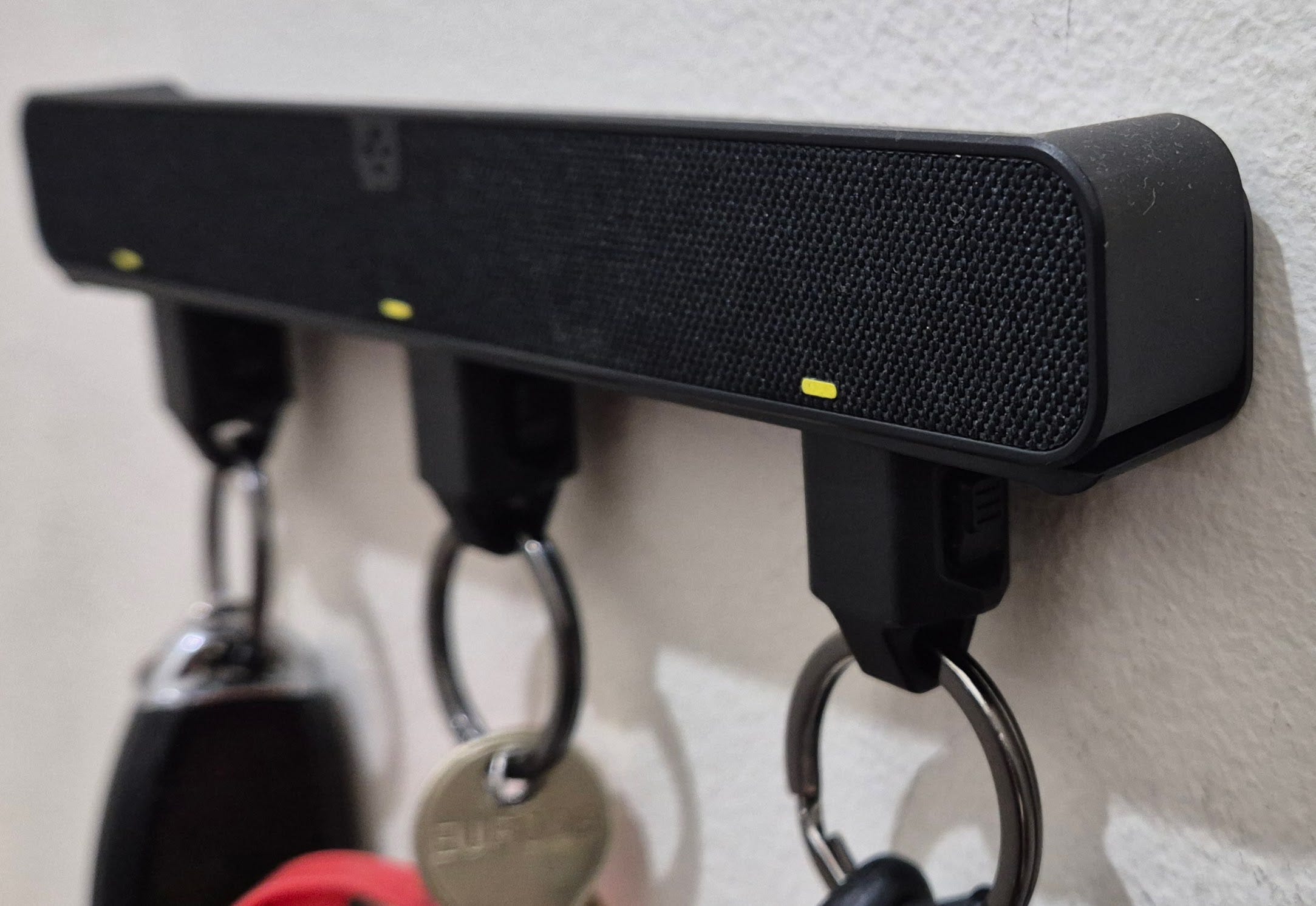
We bought a magnetic key holder — an adhesive-mounted plate with a strong magnetic keyring. No hooks. No slots. Just magnet meets metal.
What surprised me wasn’t that it held the keys. It was how decisively it did so.
You don’t place the keys — you let go. The snap is tactile and audible. If the key isn’t there, it’s immediately obvious. Not five minutes before we leave. Immediately.
It doesn’t try to fix my habit.
It removes the moment where my habit usually fails.
A tiny product that designed around human forgetfulness instead of fighting it.
The dishwasher
Morning anxiety used to start with a question mark: Will the maid come today?
If the answer was no, the day began with vessels instead of breakfast, followed by rushed decisions and Swiggy guilt.
The dishwasher removed that entire branch of thinking.
As someone who manages people, I find it mildly ironic how comforting machines can be when predictability matters most. The dishwasher doesn’t negotiate. It doesn’t surprise you. It does exactly what it promised.
The science helps too — steam, temperature, detergents. It feels safer.
And feelings matter.
The sofa cover
Two kids meant food crumbs slowly migrating into sofa corners and turning furniture into places we didn’t want to inspect too closely.
We debated an expensive vacuum. Instead, we tried a free-size sofa cover.
It wasn’t elegant. It worked.
Crumbs stopped accumulating. Cleaning became easier. Pests reduced. Pressure reduced. Sometimes the simplest intervention buys the most peace.
Removing the TV. Adding a projector.
We intentionally removed the television from the hall.
Not as a parenting statement — but because it had quietly become the default. The kids stopped noticing the play park, the swimming pool, the cycles in the parking. Bored eating crept in.
We didn’t want to remove digital fun entirely, though.
So we bought a projector and a sound bar.
Now movies require setup. Waiting. Darkness. Intention.
Movie nights feel like events again. The kids love the experience — partly because it’s tech, partly because it isn’t always on. A reminder that constraints can improve enjoyment.
The car bed
Long drives to our native place had become exhausting. One child outgrew the back seat. The other struggled to nap.
We bought a car bed as an experiment.
Travel became calmer. Naps happened. Peace returned.
It’s not perfect — safety trade-offs still bother me — but as a prototype, it solved a real problem. Sometimes that’s enough to keep going.
The monitor
I used to run a dual-screen setup as a developer. While setting up my home office this time, I paused.
I’m not optimizing for code anymore. My days are meetings, reading, writing.
I chose a single large monitor instead — tightly integrated with my Mac.
Less visual noise. More calm.
Good design sometimes shows up as subtraction.
The Samsung tags
As travel picked up, a new kind of anxiety showed up — not losing things, but wondering if we might.
We added Samsung tags to a few predictable items.
What they really did wasn’t tracking. It was reassurance.
Knowing something could be found if needed lowered the background noise in my head. I stopped double-checking. Stopped replaying where did I last see it?
Good design sometimes works by giving you permission to stop worrying — even if you never actually use the feature you paid for.
The bookshelf
The bookshelf came in during yet another decluttering exercise — but this time with a slightly different intent.
It wasn’t about storage. It was about visibility.
We wanted reading to be obvious. Not aspirational. Not scheduled. Just present. In the line of sight. Easy to reach. Hard to ignore.
Slowly, it stopped being my bookshelf. It became ours.
Books moved in and out. Conversations started around them. It turned into a quiet symbol of shared curiosity at home — not enforced, just there.
Sometimes good design doesn’t create habits.
It creates conditions.
Subscriptions (the quietest products)
Subscriptions taught me something different.
They don’t fail loudly. They just fade.
Some stayed because they earned their place.
Lingo Kids works because my younger one enjoys it and keeps coming back. Learning happens without announcing itself. Importantly we feel in control
ChatGPT Pro stayed. Claude didn’t. Once canvas launched in GPT, the decision made itself.
YouTube Premium has been quietly invaluable with two kids at home. Netflix and Prime continue because the value equation hasn’t changed. Hotstar stays mostly for my mom — and occasionally feeds my cricket brain.
Others left without drama.
A weekly magazine never made it into our reading loop. A system design subscription left when I stopped needing it. Sun NXT saw no traffic. FirstCry ended when diapers did.
Internet was more decisive. No number of upgrades fixed Airtel’s reliability for us. Switching to ACT did — stable speeds and half-yearly billing. Fewer reminders. Fewer interruptions. Easily one of the best decisions of the year.
Even groceries mattered. We moved milk delivery from BigBasket to Akshaya Kalpa — not for price, but for hygiene and last-mile care. Covered delivery. Thoughtful handling. Small details that build trust.
Google One stayed because it never asked for attention. Airtel mobile stayed because spam protection improved and roaming became frictionless.
The best subscriptions were the ones that asked the least from us.
Looking back, this still isn’t a list of purchases.
It’s a record of moments where good design quietly reduced effort, anxiety, or friction — and then got out of the way.
One thing that stood out, though, was how differently retention showed up. Some products stayed because they kept raising the bar end to end. Others stayed simply because they continued doing their primary job well. And retention broke quickly once that core expectation slipped — improvements elsewhere stopped mattering.
As a user, it felt uncomplicated. Either the product keeps doing its main job and keeps getting better, or something else eventually replaces it.
If you’re curious about any specific product mentioned here, feel free to ask in the comments. Happy to share details.